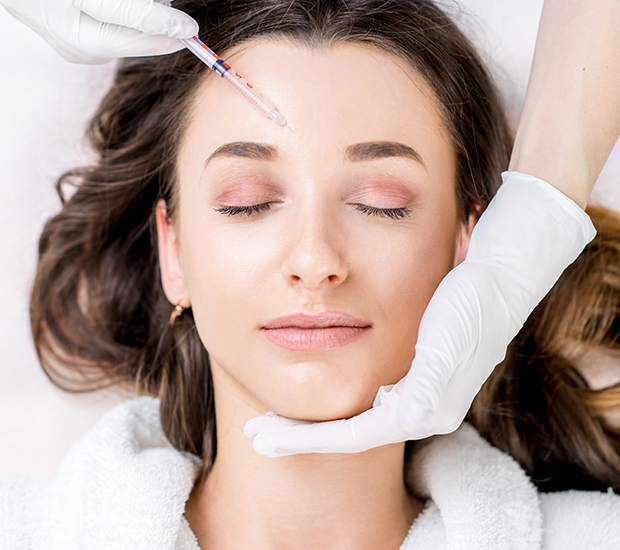
Botox® Treatment in Carmel, IN
Non-surgical cosmetic procedures are on the rise as people are looking to enhance their appearance through less invasive methods. Botox® is one of the most popular non-surgical cosmetic treatments available when administered correctly by a medical professional. Along with that, Botox softens wrinkles and fine lines while also helping to relieve some forms of pain like TMJ and bruxism discomfort.
Botox treatment is available at Smiles in the Village Dentistry for Carmel and the surrounding area. Our team provides safe and easy Botox treatment in our office. Call us at (317) 575-6101 for a consultation and learn what treatment option is right for you.
Understanding What Botox Is
Botox is an injectable treatment made from a purified form of botulinum toxin type A, a substance that temporarily affects the communication between nerves and muscles. By blocking the release of a chemical messenger involved in muscle contraction, Botox reduces activity in the targeted muscles. This effect can help soften certain facial wrinkles and may also provide relief for specific medical conditions when administered by a qualified healthcare professional.
Botox is commonly used to address dynamic wrinkles, which develop from repeated facial movements such as frowning, squinting, and raising the eyebrows. These movements can gradually contribute to visible lines on the forehead, between the eyebrows, and around the outer corners of the eyes. By temporarily relaxing the muscles responsible for these movements, Botox can make selected lines appear less noticeable while preserving a natural-looking facial expression when appropriately administered.
Although botulinum toxin can be dangerous in uncontrolled amounts, approved Botox products are manufactured and administered in carefully measured doses for specific medical and cosmetic uses. A trained professional evaluates the patient's facial anatomy, medical history, treatment goals, and potential risks before recommending injections. Treatment should always involve an authentic, approved product administered by a qualified provider.
Research published in Clinical, Cosmetic and Investigational Dermatology has examined the use of botulinum toxin type A for reducing facial wrinkles. Results depend on factors such as the treatment area, dosage, injection technique, and individual muscle activity. Botox is not a permanent solution for wrinkles, but periodic treatments may help maintain the desired appearance.
This study in the Clinical, Cosmetic and, Investigational Dermatology journal found that the injection can help relax and soften wrinkles and reduce the appearance of fine lines.Botox is a neurotoxin that targets the nervous system and disrupts the nerve signaling processes that cause muscle contraction.
Determining Botox Candidacy
Botox is an excellent option for those who want an effective yet minimally invasive cosmetic treatment. This popular treatment has high patient satisfaction rates in improving facial appearance and reducing signs of aging. Botox is low-risk yet effective and does not involve downtime for recovery like cosmetic surgery does.
According to the American Society of Plastic Surgeons, there were 7.23 million Botox procedures performed in 2017. Botox may be the right treatment for patients who first start to notice moderate lines on the face, typically after age 30 or so. However, everyone's facial lines form differently due to a combination of factors, including genetics and the environment. Patients should be healthy and not pregnant or breastfeeding. People with allergies to any of the ingredients, muscle or nerve conditions, or active infections may not be good candidates for this treatment.
Botox is an excellent option for those who want an effective yet minimally invasive cosmetic treatment.
Cosmetic and Medical Usage of Botox
Depending on the patient's needs, Botox can help with either cosmetic or medical purposes. Botox injections are one of the most popular cosmetic procedures in the nation. Injections can reduce wrinkles around the eyes and mouth; on the forehead and chin; and between the eyebrows.
Medical professionals also use Botox to treat some medical conditions. In particular, injections can treat conditions that affect the neuromuscular system. The FDA has approved Botox treatment for conditions like chronic migraines, eyelid spasms, hyperhidrosis, and cervical dystonia.
Depending on the patient’s needs, Botox can help with either cosmetic or medical purposes.
Check out what others are saying about our dental services on Yelp: Botox in Carmel, IN
The Botox Injection Process
The Botox injection process generally begins with a consultation and assessment of the areas the patient wants to address. The provider examines facial movements, identifies the muscles contributing to the targeted lines, and develops an individualized treatment plan. Patients should have realistic expectations and understand that results vary according to facial anatomy, muscle strength, and the amount of product used.
During treatment, the provider cleans the injection sites and uses a fine needle to administer small amounts of Botox into selected muscles. The number of injections depends on the treatment area and the patient's needs. Many cosmetic appointments take approximately 10 to 30 minutes, although consultation and preparation may increase the total visit time.
Most patients describe the injections as brief pinches or mild discomfort. Temporary redness, swelling, tenderness, or bruising may occur at the injection sites. These effects usually improve without significant intervention. Patients can generally resume many normal activities shortly after treatment, although they should follow the provider's specific aftercare instructions.
Botox does not produce its full cosmetic effect immediately. Some patients begin noticing changes within a few days, while the effect generally develops over approximately one to two weeks. A follow-up assessment may help determine whether the results meet the treatment goals and whether additional care is appropriate.
Results typically last around three to four months for many cosmetic treatments, although some patients experience shorter or longer effects. The duration depends on the treatment area, dosage, individual muscle activity, and previous treatment history. Repeat injections should be scheduled according to professional guidance rather than automatically following a fixed timetable.
Individuals commonly get Botox to target forehead lines, crow’s feet, and frown lines around the mouth.
Questions Answered on This Page
Q. Who is the right candidate for Botox?
Q. What cosmetic and medical purposes can Botox be used for?
Q. What is the procedure process?
People Also Ask
Q. How can cosmetic dentistry restore teeth?
Q. What are some cosmetic dentistry treatment options?
Q. How long does teeth whitening treatment take?
Q. Beyond regular checkups, what additional procedures might a dentist recommend?
The Recovery Period
Botox generally requires little downtime, but following aftercare instructions can help patients manage temporary side effects and avoid unnecessary irritation. Mild swelling, redness, tenderness, or bruising can occur around the injection sites. These effects typically resolve over a short period, although individual recovery experiences vary.
Patients are commonly advised to avoid rubbing, massaging, or applying firm pressure to the treated areas immediately after injections. Your provider may recommend remaining upright for a period following treatment and temporarily avoiding strenuous exercise, depending on the treatment performed and their clinical instructions. Specific recommendations may differ, so follow the guidance provided at your appointment.
It is also important to avoid arranging additional cosmetic procedures in the same area without discussing timing with your provider. Inform the clinician about any medications or supplements you use, particularly those that may affect bleeding, and do not stop prescribed medication without advice from the prescribing healthcare professional.
Although serious complications are uncommon with appropriate treatment, botulinum toxin can occasionally cause problems such as eyelid drooping, unwanted muscle weakness, or swallowing and breathing difficulties. Seek immediate medical attention if you experience difficulty swallowing or breathing, significant generalized weakness, or other severe symptoms after treatment.
“Upon completion of Botox treatment, patients should refrain from rubbing or itching the injected area for at least 4 hours.”
Frequently Asked Questions
Q. How much does Botox cost?
A. Botox is one of the more affordable cosmetic procedures available. Cost varies depending on how many injections and the dosage. Scheduling a consultation with our team will allow us to determine the right treatment plan for you. Patients should also make sure to contact their insurance provider to ask about coverage.
Q. Will I feel pain with Botox?
A. Most patients will not feel much more than a little discomfort during the injections. There may be a small pinch where the injection occurs. This discomfort can be reduced by the use of a topical cream or ice pack.
Q. How often should I get Botox?
A. For cosmetic treatment, patients should get Botox® treatment approximately every three to four months. Over time, the muscles may be able to go longer than four months between treatments. Some patients schedule their treatments every six months.
Q. Will my results look overdone or unnatural?
A. Botox results are technique-sensitive, so it is essential to choose a clinician with experience and skill administering this treatment. It is important to research the procedure and consult trained professionals. Our team will work with you to find the proper dosage and treatment plan for you.
Q. What areas do doctors treat with Botox?
A. According to the American Academy of Facial Esthetics, there are approximately 10 different areas where practitioners inject Botox. Doctors may inject into the muscle above the brow, the space between the brows, outside of the eye area, and other facial muscles to reduce wrinkles. They may also use it in the armpits, palms, and feet to treat excessive sweating.
Q. What happens when I stop Botox?
A. Botox may also help prevent new wrinkles from forming because of how it affects the facial muscles. However, if patients choose to stop regular injections, the drug will slowly wear off, and the skin will return to the way it was. Stopping treatment will not make wrinkles worse.


Scan here to view this page, Botox, on mobile



Terminology
Helpful Related Links
- American Dental Association (ADA). Glossary of Dental Clinical Terms. 2024
- American Academy of Cosmetic Dentistry® (AACD). Home Page. 2024
- WebMD. WebMD’s Oral Care Guide. 2024
About our business and website security
- Smiles in the Village Dentistry was established in 2008.
- We accept the following payment methods: Cash, Check, Discover, MasterCard, and Visa
- We serve patients from the following counties: Hamilton County, Marion County, and Boone County
- We serve patients from the following cities: Carmel, Fishers, Noblesville, Westfield, Zionsville, Lebanon, and Indianapolis
- National Provider Identifier Database (1972605111). View NPI Registry Information
- Norton Safe Web. View Details
- Trend Micro Site Safety Center. View Details

Scan here to open directions to Smiles in the Village Dentistry on mobile
Back to top of Botox
Related Posts
Fresh Season, Fresh Smile: Cosmetic Dentistry Options To Brighten Your Look This Spring
Spring is a season of renewal. As the days grow longer and brighter in Carmel, IN, many people take the opportunity to refresh their routines, wardrobes, and personal goals. But one of the most noticeable ways to embrace a fresh start is by enhancing your smile.At Smiles in the Village Dentistry, we see interest in…


Brighten Your Holiday Smile: Benefits Of Professional Teeth Whitening In Carmel, IN
The holidays are a season full of joy, celebrations, family gatherings, and countless photo opportunities. Whether you're attending festive gatherings, reuniting with family, enjoying a holiday party, or capturing memories for holiday cards, your smile is often front and center.If your teeth are looking dull, stained, or discolored, the holiday season can be a great…

Winter Dental Checkups: Why Preventive Dentistry Matters Before The New Year
As the year winds down and holiday plans fill your calendar, it’s easy to let a dental appointment slip to the bottom of your to-do list. However, winter—especially the weeks leading up to the new year—is an important time to prioritize preventive dental care. Cold weather, seasonal sweets, dry indoor air, and busy schedules can…
Explore additional topics covered on our website:
Call Us Today

Scan here to call Smiles in the Village Dentistry on mobile